How to lose fat without losing muscle
Discover how to lose fat while preserving your muscle mass through an appropriate calorie deficit, sufficient protein intake and resistance training.
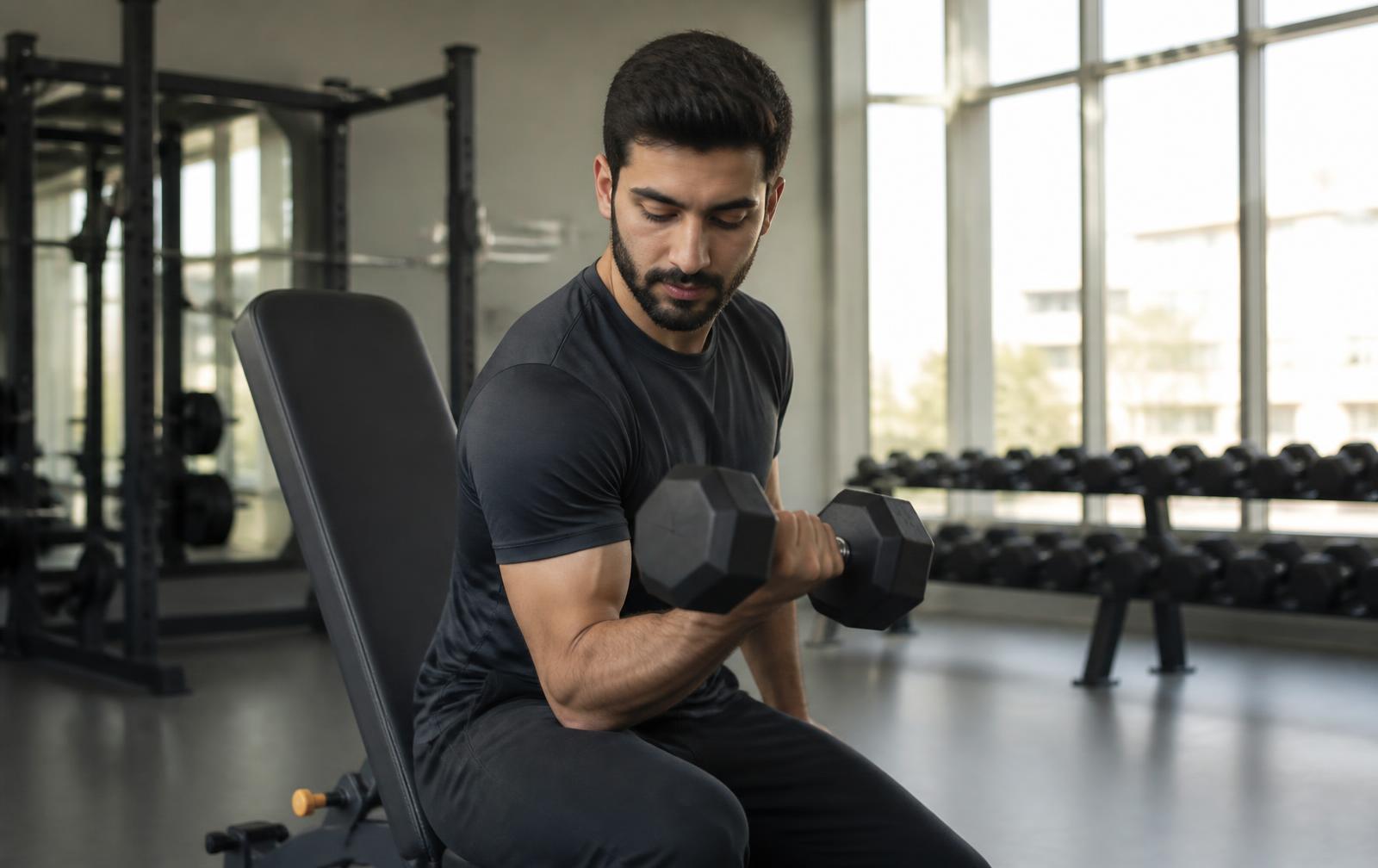
Losing weight is not always the same as losing fat
Losing weight seems simple in theory. You would just need to consume fewer calories than you burn. In practice, however, many people find that after several weeks of dieting, they are certainly lighter… but not necessarily more muscular.
Some even notice a drop in training performance, reduced strength and a greater feeling of fatigue.
This situation is explained by a well-known phenomenon. When a calorie deficit is poorly managed, the body does not lose fat alone. It can also lose part of its muscle mass.
Yet preserving that muscle mass is essential. It contributes not only to physical performance but also to maintaining strength, metabolism, mobility and body composition over the long term.
Fortunately, the scientific literature shows that it is possible to significantly reduce fat mass while retaining most of one's muscle mass. This strategy rests on a few simple principles: an appropriate calorie deficit, sufficient protein intake, well-built resistance training and quality recovery.
The real question, then, is not how to lose as much weight as possible, but how to lose mostly fat while protecting the muscle you have built.
Why do you sometimes lose muscle during a diet?
Muscle is a metabolically costly tissue to maintain. When the body receives less energy than it expends, it seeks to save resources.
If no signal tells it that muscle mass remains necessary, it may gradually reduce some of it in order to lower its energy needs.
Several factors promote this loss: a very large calorie deficit, insufficient protein intake, the absence of resistance training, or insufficient recovery.
Conversely, when muscles continue to be regularly worked and nutritional intake is appropriate, the body receives a clear message: these tissues remain useful and should be preserved. This is precisely the principle behind most modern fat-loss strategies.
What the scientific literature actually shows
Research is very consistent on this topic today. Weight loss does not automatically mean a significant loss of muscle mass.
Studies show that combining resistance training, sufficient protein intake and a moderate calorie deficit preserves most lean mass during a fat-loss phase.
Conversely, very restrictive diets, combined with little physical activity or with cardiovascular exercise alone, further increase the risk of losing muscle.
Researchers also observe that the rate of weight loss influences results. Gradual loss is generally associated with better preservation of muscle mass than very rapid loss.
In other words, the quality of the deficit often matters more than its size. This conclusion is now supported by several systematic reviews and recommendations aimed at athletes.
The quality of the deficit often matters more than its size.
Why does protein become even more important?
During a calorie deficit, protein fulfils several essential functions. It supplies the amino acids needed to renew muscle tissue and helps limit the breakdown of muscle protein.
Several studies show that a high protein intake helps better preserve lean mass during fat loss, particularly in people who train regularly with weights.
For this reason, recommendations for athletes in a calorie deficit are generally higher than those for the general population. Depending on context, an intake of roughly 1.8 to 2.4 g of protein per kilogram of body weight per day is an effective strategy for limiting muscle losses.
These recommendations must, however, be paired with appropriate training. Protein alone is not enough to prevent muscle loss.
The essential role of resistance training
Some people replace resistance training entirely with cardio when trying to lose weight. This strategy seems logical at first. Cardio increases energy expenditure.
However, it does not provide the same mechanical stimulus as resistance training. Muscles need to be regularly worked to maintain their size and their ability to produce force.
Continuing to lift weights, even during a calorie-deficit phase, sends a clear signal to the body: these muscles remain necessary.
Performance may slightly decline as the deficit continues. This is normal. The goal is not to set personal records during a cut. It is to maintain loads, volume and technical quality as much as possible in order to preserve the adaptations already gained.
Is cardio essential during fat loss?
Contrary to a widely held belief, cardio is not a requirement for losing fat. Fat loss depends above all on the calorie deficit.
It is entirely possible to succeed at a fat-loss phase without doing any cardio, provided your diet maintains a negative energy balance.
Cardio can nevertheless be a useful tool. It increases energy expenditure, improves cardiovascular health and sometimes makes it easier to create a deficit without excessively cutting food intake. Its value therefore depends more on how it is used than on its mere existence.
A moderate amount of cardio generally complements a resistance training programme very well. Conversely, piling on long cardio sessions while sharply cutting calories can make recovery harder and increase the risk of muscle loss.
The goal, then, is not to do as much cardio as possible. It is to find a balance compatible with recovery and training performance.
The most common mistakes
One of the most common mistakes is cutting calories abruptly. Very rapid weight loss often increases fatigue, reduces performance and further promotes the loss of muscle mass.
Another mistake is dropping resistance training entirely during a cutting phase. Without resistance training, muscle receives far less stimulus to be preserved.
Some people also sharply increase their cardio volume while reducing their protein intake. This combination reduces the chances of effectively preserving lean mass.
Finally, many people judge progress solely by the number on the scale. Yet two people losing the same number of kilograms can achieve very different results depending on the proportion of fat and muscle lost. Body composition is therefore a far more meaningful indicator than weight alone.
Practical recommendations
For most trainees, current recommendations can be summarised simply. Create a moderate calorie deficit rather than an excessive restriction.
Consume between 1.8 and 2.4 g of protein per kilogram of body weight per day during your fat-loss phase.
Keep practising resistance training, trying to maintain your performance as much as possible. Use cardio as a complement, not as your main fat-loss tool.
Sleep enough and pay particular attention to your recovery.
Conclusion
Losing fat without losing muscle is not only possible; it is the goal sought by most weight trainers.
Scientific data shows that an effective strategy relies on a few simple principles: a moderate calorie deficit, a high protein intake, maintained resistance training and sufficient recovery.
Conversely, very restrictive diets, combined with reduced training or excessive cardio volume, further increase the risk of losing muscle mass.
The goal, then, is not to lose as much weight as possible in the shortest time. It is to progressively improve your body composition by shedding mainly fat while keeping the muscle built over months of training.
Frequently asked questions
Scientific references
- 1.Helms ER, Aragon AA, Fitschen PJ. Evidence-based Recommendations for Natural Bodybuilding Contest Preparation: Nutrition and Supplementation. Journal of the International Society of Sports Nutrition, 2014.
- 2.Hector AJ, Phillips SM. Protein Recommendations for Weight Loss in Elite Athletes: A Focus on Body Composition and Performance. International Journal of Sport Nutrition and Exercise Metabolism, 2018.
- 3.Longland TM, Oikawa SY, Mitchell CJ, Devries MC, Phillips SM. Higher Compared with Lower Dietary Protein During an Energy Deficit Combined with Intense Exercise Promotes Greater Lean Mass Gain and Fat Mass Loss. The American Journal of Clinical Nutrition, 2016.
- 4.Murphy CH, Koehler K. Energy Deficiency Impairs Resistance Training Gains in Lean Mass but Not Strength: A Meta-Analysis and Meta-Regression. Scandinavian Journal of Medicine & Science in Sports, 2022.
About the author
Daniel Reyes
Registered dietitian-nutritionist
Daniel guides amateur and professional athletes towards nutrition they can actually apply, and reviews ORYX's food and supplement coverage.
Read next
The weekly letter
One calm read, every Sunday
One essay and a short selection of studies worth your attention. No promotions, no urgency, no noise.