Does caffeine really improve your workouts?
Does caffeine really improve sporting performance? Discover what research shows about strength, endurance, power, effective doses and side effects.
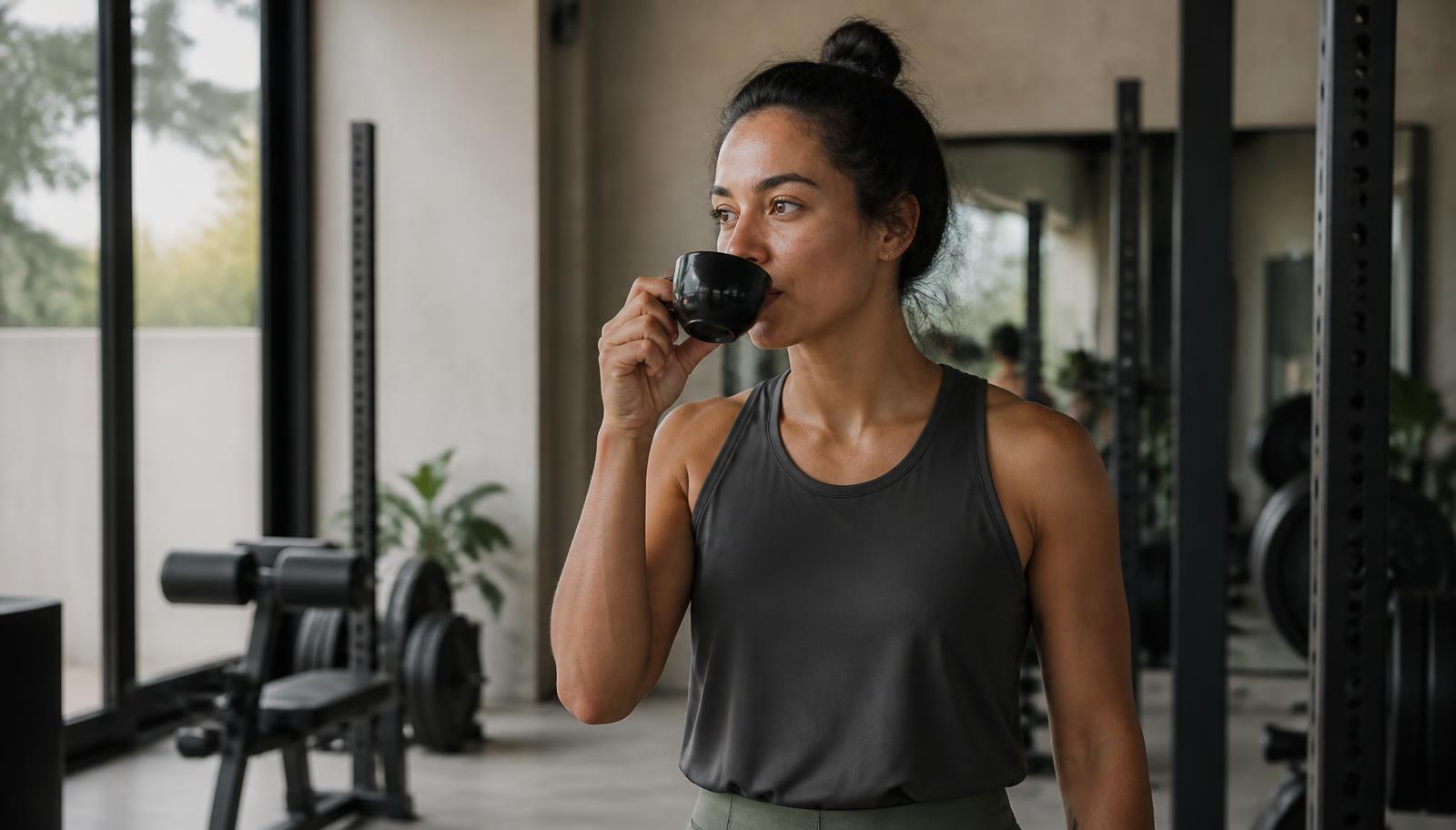
Does caffeine really improve your workouts?
Caffeine is probably the most widely consumed stimulant in the world.
It is found in coffee, tea, some energy drinks, but also in many pre-workout supplements.
For many people who train, a session without caffeine seems almost unthinkable.
They claim it boosts their energy, focus and performance.
Conversely, others believe its effects are largely overstated and that it simply produces a feeling of motivation.
So what does the research actually show?
Unlike many supplements whose benefits remain debated, caffeine is among the most studied substances in sports nutrition.
Hundreds of studies have assessed its influence on strength, endurance, muscular power and cognitive performance.
Their conclusion is relatively clear.
In many people, caffeine can indeed improve certain physical performances.
However, its effects vary according to the individual, the dose consumed, the timing of intake and the tolerance developed over time.
The real question, then, is not whether caffeine works, but in which situations it actually provides a benefit.
What the scientific literature actually shows
Meta-analyses show that it can improve several aspects of physical performance.
Benefits are notably observed for maximal strength, muscular endurance (for example the number of repetitions performed), power, as well as aerobic endurance performance such as running or cycling.
The improvements generally remain modest.
However, even a gain of a few percent can represent an important difference for some athletes.
Researchers also observe positive effects on alertness, reaction time and concentration.
These benefits explain why caffeine is now widely used across many sporting disciplines.
It is worth remembering, however, that individual responses vary considerably. Some people feel a marked effect, while others observe much more limited benefits — a common phenomenon when comparing studies with each other, as explained in “What is a meta-analysis?”.
What amount is typically used?
Current recommendations for athletes generally sit around 3 to 6 mg of caffeine per kilogram of body weight, taken about an hour before exercise.
This range matches that used in most of the research.
Lower doses, around 200 mg (less than 3 mg/kg), can already produce an ergogenic effect in some people, particularly on alertness and perceived exertion.
Higher doses generally do not improve performance further.
On the other hand, they increase the risk of adverse effects such as tremors, nervousness, increased heart rate or digestive issues.
Researchers therefore recommend using the smallest dose that produces a satisfactory effect, rather than systematically seeking the highest doses.
Does tolerance reduce the effects?
Yes.
High daily consumption can gradually reduce some of caffeine's perceived effects. This phenomenon is nonetheless the subject of sometimes contradictory studies: some work reports no clear difference between regular and occasional users.
This does not mean it stops working altogether.
On the other hand, some people used to drinking several coffees a day perceive its benefits less strongly than at first.
This adaptation explains why some athletes reserve caffeine for important sessions or competitions rather than using it before every training session.
Are side effects common?
Like any active substance, caffeine can cause adverse effects.
The most common are:
increased nervousness;
tremors;
increased heart rate;
digestive issues in some people;
difficulty falling asleep when consumed too late in the day.
Sensitivity varies considerably between individuals.
Some people easily tolerate several coffees a day.
Others feel marked effects after a single cup.
For this reason, it is preferable to gradually test your tolerance rather than immediately using high doses.
People who are pregnant, prone to anxiety or heart rhythm disorders, or taking medication, should seek advice from a health professional before adding caffeine to their training routine.
The most common mistakes
One of the most common mistakes is believing that more caffeine automatically produces better performance.
Research does not support this idea.
Beyond a certain dose, benefits plateau while side effects become more frequent.
Another mistake is using caffeine to compensate for chronic lack of sleep.
Even though it can temporarily mask the feeling of fatigue, it does not replace the effects of sufficient recovery, as detailed in “How many hours of sleep do you need?”.
Finally, many people who train consume several sources of caffeine at the same time (coffee, energy drinks, pre-workout, soft drinks…) without calculating their total intake.
This build-up can lead to doses far higher than intended.
Practical recommendations
For most people who train, current recommendations can be summed up simply.
Use caffeine only if it genuinely improves how you feel and how you perform.
Start with a low dose to assess your individual tolerance.
Avoid consuming caffeine too late in the day if it disrupts your sleep.
Do not seek to systematically increase the dose.
Consider caffeine as an occasional tool that complements good training, an appropriate diet and sufficient recovery.
Conclusion
Caffeine is among the best-documented supplements in sports science.
Research shows it can improve strength, endurance, power and concentration in many people who train.
However, its effects remain variable from one person to another.
A higher dose does not automatically mean better performance, and excessive consumption can cause adverse effects or disrupt sleep.
Ultimately, caffeine replaces neither well-built training, nor an appropriate diet, nor quality recovery.
It is simply an additional tool that, when used thoughtfully, can provide a slight advantage in certain sessions.
Frequently asked questions
Scientific references
- 1.Grgic J, Grgic I, Pickering C, Schoenfeld BJ, Bishop DJ, Pedišić Ž. Wake up and Smell the Coffee: Caffeine Supplementation and Exercise Performance—An Umbrella Review of 21 Published Meta-analyses. British Journal of Sports Medicine, 2020;54(11):681-688.
- 2.Guest NS, VanDusseldorp TA, Nelson MT, et al. International Society of Sports Nutrition Position Stand: Caffeine and Exercise Performance. Journal of the International Society of Sports Nutrition, 2021;18(1):1.
- 3.Southward K, Rutherfurd-Markwick KJ, Ali A. The Effect of Acute Caffeine Ingestion on Endurance Performance: A Systematic Review and Meta-Analysis. Sports Medicine, 2018;48(8):1913-1928.
- 4.Spriet LL. Exercise and Sport Performance with Low Doses of Caffeine. Sports Medicine, 2014;44(Suppl 2):S175-S184.
About the author
Daniel Reyes
Registered dietitian-nutritionist
Daniel guides amateur and professional athletes towards nutrition they can actually apply, and reviews ORYX's food and supplement coverage.
Read next
The weekly letter
One calm read, every Sunday
One essay and a short selection of studies worth your attention. No promotions, no urgency, no noise.
How does caffeine work?
Contrary to a common belief, caffeine does not directly provide energy.
It acts mainly on the central nervous system.
Its best-known mechanism is temporarily blocking the action of adenosine.
This molecule normally contributes to the build-up of the feeling of fatigue over the course of the day.
By limiting its action, caffeine generally increases alertness and reduces perceived fatigue. Effort then often feels a little less difficult.
It sometimes becomes possible to maintain a high intensity for longer or to produce more force.
This reduction in perceived fatigue explains a large part of its observed effects on sporting performance.