Do strength training shoes really improve performance?
Do strength training shoes really improve performance? What research shows about stability, biomechanics and strength.
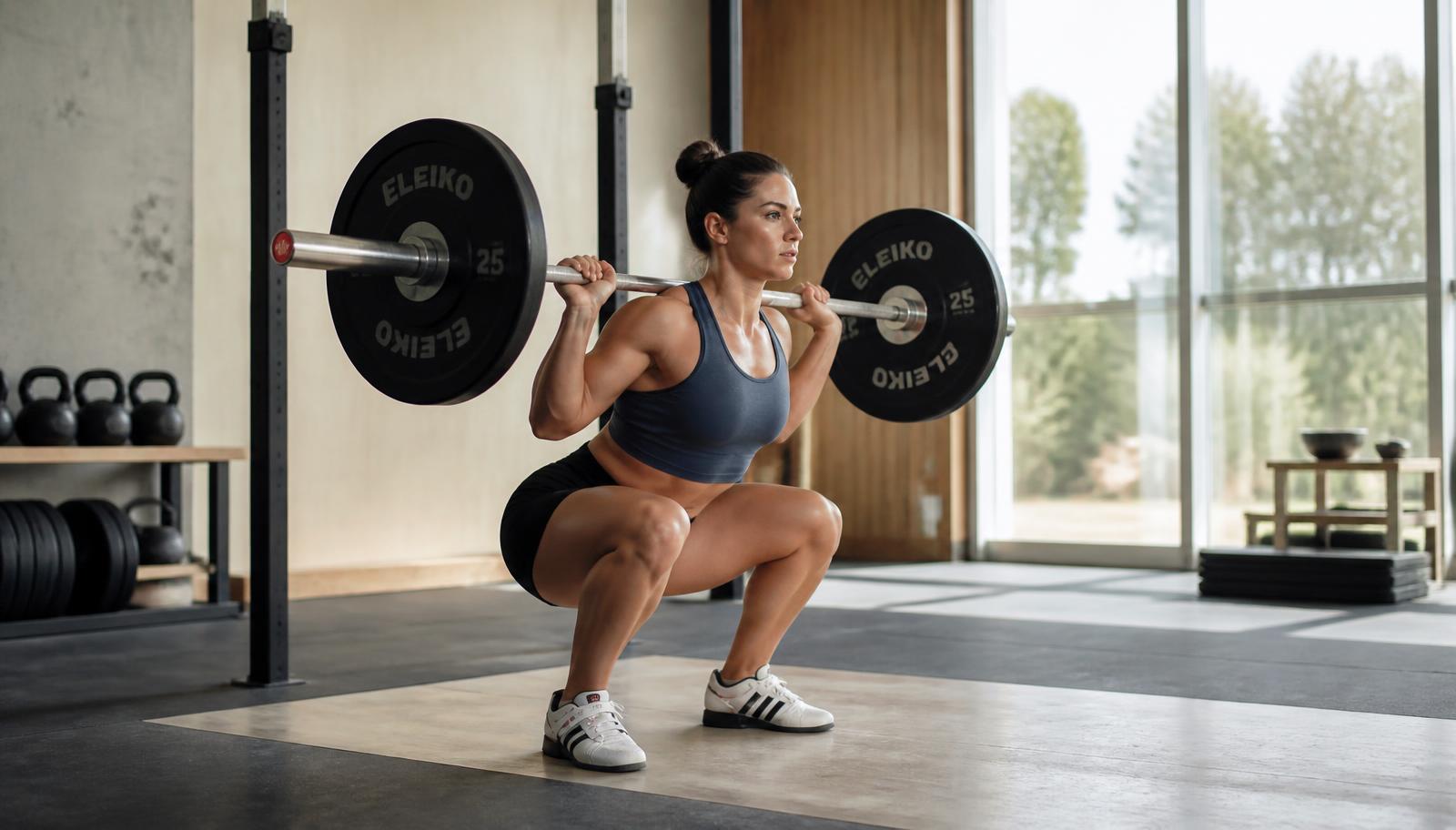
A promise that seems obvious
At first glance, the answer seems obvious. Shoes specifically designed for strength training have existed for years. They promise greater stability, better force transmission, and superior performance on major exercises.
Their popularity keeps growing. In gyms, it is no longer uncommon to see trainees wearing elevated-heel weightlifting shoes or flat-soled models designed for powerlifting.
For some, they have become almost indispensable. For others, they are just an expensive accessory with no real benefit. So do they actually improve performance, or are they mostly marketing? Research now allows for a much more nuanced answer than a simple yes or no.
Why do shoes have an influence?
When you lift a load, all the force produced by your muscles must be transmitted to the floor. This transmission depends notably on foot stability.
A running shoe, for example, has a soft sole designed to absorb impact. This quality becomes a drawback under a heavy barbell: some of the force is absorbed by the foam, reducing stability and increasing unwanted movement of the foot.
Conversely, shoes designed for strength training use a much more rigid sole. The aim is not to cushion movement, but to provide a stable base on which to produce maximum force.
This difference may seem minor. Yet under heavy loads, it can change the quality of the footing and the trainee's confidence.
Not all strength training shoes are alike
All models are often grouped into a single category. In reality, two main families meet different needs.
Weightlifting shoes have a very rigid sole and a slightly elevated heel. This design facilitates knee flexion and can allow some people to more easily achieve a deep squat position, particularly when ankle mobility is limited.
“Flat” shoes, very popular in powerlifting, instead feature a completely flat, rigid sole. They bring the foot closer to the ground and offer excellent stability for movements like the deadlift.
No model is objectively superior. It all depends on the exercise being performed, the athlete's build, and their goals.
What the research shows
Available studies show that weightlifting shoes can alter the biomechanics of certain exercises, particularly the squat. In many trainees, the elevated heel increases range of motion while helping to maintain a more upright torso.
This change can improve technical comfort and allow some people to produce more force in this position. However, these benefits are not universal: trainees who already have excellent ankle mobility sometimes see much more modest differences.
Research also shows that rigid shoes offer better stability than running shoes during strength exercises. This does not necessarily mean a dramatic increase in performance, but they reduce unnecessary foot movement and provide a more consistent feeling of footing, particularly valued under heavy loads.
Can shoes compensate for a lack of mobility?
This is probably the most widespread misconception. Someone lacking ankle mobility may indeed find the squat more comfortable with an elevated heel. But that does not mean the problem is solved.
Shoes change the body's position. They do not directly improve joint mobility. In other words, they can make executing a movement easier without correcting the underlying limitation.
For some trainees, this adaptation is perfectly appropriate. For others, specific mobility work will remain useful to expand their range of movement.
Do shoes really increase performance?
The answer depends on what is meant by “performance”. Research does not show that wearing strength training shoes instantly turns a trainee into a stronger athlete. However, they can improve the conditions under which force is produced.
Better stability, a more suitable position, or a more comfortable range of motion sometimes make it possible to more effectively express capacities that are already present.
For experienced trainees, where every detail counts, this difference can become meaningful. For a beginner, it generally remains far less decisive than the quality of the training programme, technique, or recovery.
Shoes do not create extra strength. They simply help you make better use of the strength you already have.
Who really benefits from investing?
Not everyone needs a specialised pair. For someone who trains occasionally with moderate loads, a stable shoe with a reasonably firm sole is often enough.
However, certain profiles can gain a bigger benefit from a specific model. Powerlifters will generally appreciate a flat, rigid shoe for the deadlift and many strength exercises.
Weightlifting enthusiasts or people who regularly perform deep squats may prefer an elevated-heel model, particularly if limited ankle mobility restricts their position. This is not an absolute rule: the choice always depends on build, goals and individual preferences.
Can you train barefoot?
In some gyms or at home, some trainees choose to take off their shoes for certain exercises. From a biomechanical standpoint, this practice offers a few advantages.
Being barefoot or wearing a very flat shoe brings the foot closer to the floor and limits sole compression. For movements like the deadlift, this can improve stability and slightly reduce the range of motion.
However, this practice is not always allowed in gyms for hygiene and safety reasons. In addition, it does not suit every exercise: Olympic lifts generally benefit more from a shoe specifically designed to offer stability and support.
In practice
Before investing in a pair of strength training shoes, ask yourself a few simple questions. Which exercises do you do most often? Is your stability limiting your performance? Does your ankle mobility make certain movements difficult? Are you looking for a technical comfort gain or hoping for a major performance increase?
For most trainees, specialised shoes mainly improve the quality of footing and confidence during heavy movements. They represent an optimisation, not a transformation.
Conclusion
Strength training shoes are neither a mere marketing accessory nor essential equipment. Their value mainly depends on your practice.
Research shows that they can improve stability, favourably alter the biomechanics of certain exercises, and make movements like the squat easier for some trainees. However, they replace neither good technique, nor adequate mobility, nor a well-built training programme.
Ultimately, the best strength training shoes are not the ones that promise the most performance, but the ones that let you execute every rep with greater stability, confidence and consistency.
Frequently asked questions
Scientific references
- 1.Sato K, Fortenbaugh D, Hydock DS. Kinematic Changes Using Weightlifting Shoes on Barbell Back Squat. Journal of Strength and Conditioning Research, 2012.
- 2.Legg HS, Glaister M, Cleather DJ, Goodwin JE. The Effect of Weightlifting Shoes on the Kinetics and Kinematics of the Back Squat. Journal of Sports Sciences, 2017.
- 3.Whitting JW, Meir RA, Crowley-McHattan ZJ, Holding RC. Influence of Footwear Type on Barbell Back Squat Using 50, 70, and 90% of One Repetition Maximum. Journal of Strength and Conditioning Research, 2016.
- 4.Hammer ME, Meir R, Whitting J, Crowley-McHattan Z. Shod versus Barefoot Effects on Force and Power Development During a Conventional Deadlift. Footwear Science, 2017.
About the author
Amara Osei
Sleep researcher, PhD
Amara studies sleep and human performance, and translates dense literature into things you can act on tonight.
Read next
The weekly letter
One calm read, every Sunday
One essay and a short selection of studies worth your attention. No promotions, no urgency, no noise.