Are smartwatches really reliable for training?
Are smartwatches reliable for sport? Here is what the research shows about heart rate, calories burned and step counts.
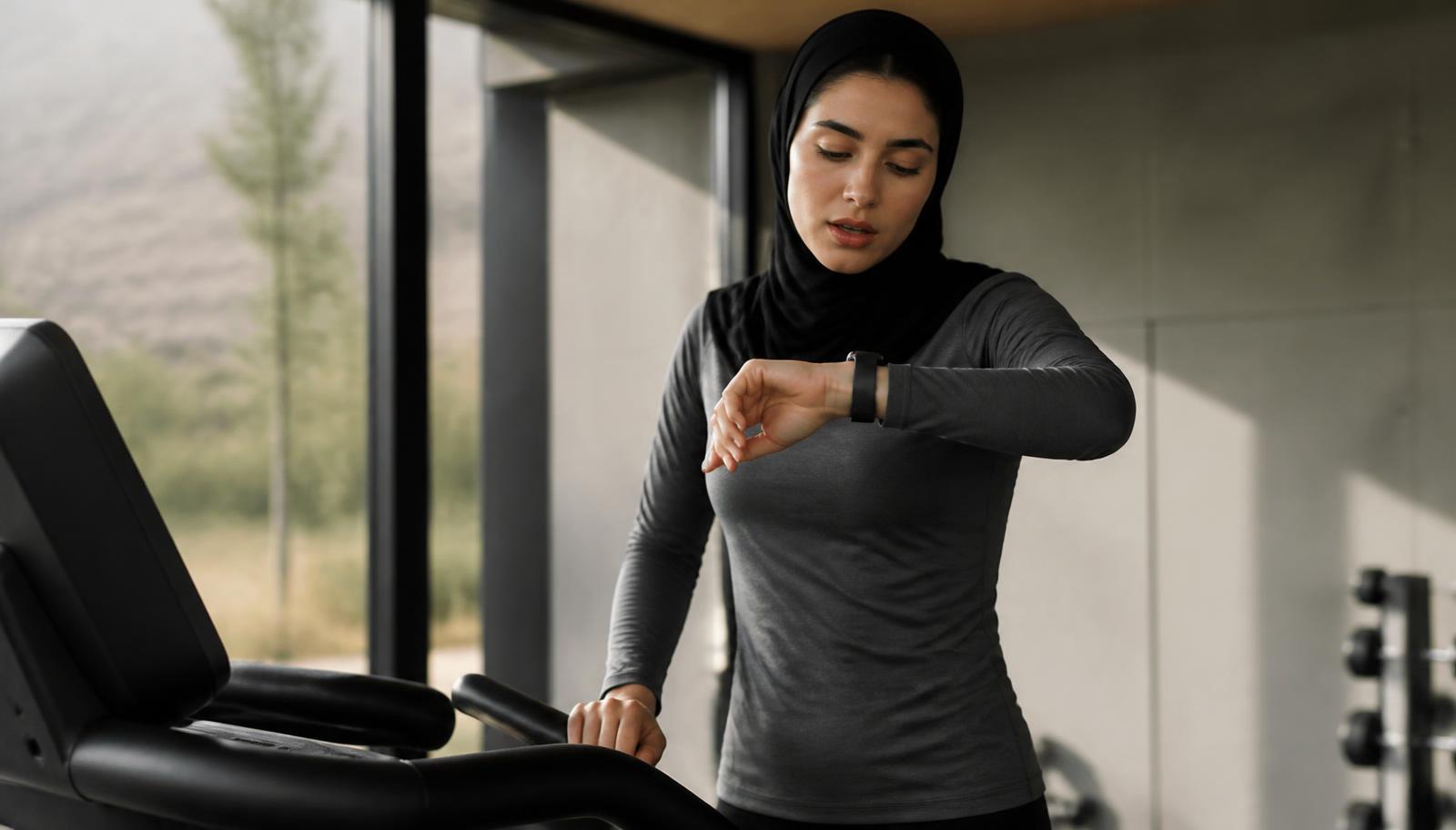
Are smartwatches really reliable for training?
Smartwatches have become almost unavoidable in sport. They display heart rate, calories burned, steps, distance, pace and sometimes even an estimate of VO₂max.
But can you really trust all of that data? Not exactly. Reliability depends mostly on what the watch is measuring and on the type of activity you are doing.
Heart rate is one of the most reliable measurements
This is probably the number you can trust most. A review of commercially available wearables found that heart rate measurement could be relatively accurate, even though results varied by brand, model and measurement conditions.
A 2026 study in Sensors also compared four smartwatches (Apple, Galaxy, Fitbit and Garmin) with an electrocardiogram in 62 men, during both endurance and resistance exercise. The watches showed good accuracy for heart rate in both types of exercise, although results differed between models.
That does not mean a watch replaces a medical measurement. But for tracking training intensity — a theme at the heart of “Cardio and lifting: can you progress in both?” — the heart rate shown can be genuinely useful.
Calories burned are far less reliable
This is probably the biggest limitation of smartwatches. A watch can display “540 kcal burned” with a precision that suggests the number is exact. It is not.
A meta-analysis of 60 studies found that the accuracy of energy expenditure estimates varied widely depending on the activity and the device. How to read that kind of synthesis is explained in “What is a meta-analysis?”.
A more recent review points the same way: wearables tend to underestimate energy expenditure, with errors that vary considerably by context.
During resistance training the problem can be even bigger. The same 2026 study comparing four smartwatches found their energy expenditure estimates were limited during endurance work and less accurate still during resistance exercise.
In other words, if your watch says you burned 600 kcal, treat that as an estimate rather than a measurement.
What about steps?
The picture is generally better here. Studies show that some watches and trackers can count steps with reasonable accuracy, particularly under controlled conditions.
Even so, accuracy can vary with the device, the movement and the person wearing it.
For following a general trend — going from 6,000 to 9,000 steps a day, say — a watch can be very useful. There is simply no need to treat every displayed step as a perfect measurement.
The type of sport changes everything
A smartwatch does not measure every activity with the same precision. Running at a steady pace is relatively easy for a device to analyse. Resistance training is far more complicated.
During a set, wrist movement, the rest intervals discussed in “How long should you rest between sets?”, exercise changes and muscular contractions all make interpretation much harder.
Research indeed shows that device accuracy varies with the type of activity and its intensity. That is one more reason not to take every displayed number at face value.
Can you use a watch to track your training?
Yes. And this is probably where smartwatches are most interesting: they let you follow trends.
Is your average heart rate rising at the same pace? Is your weekly distance increasing? Are your step counts higher than three months ago? Is your pace improving?
That information can be far more useful than chasing absolute precision on every figure. A smartwatch is therefore more of a tracking tool than a miniature laboratory on your wrist.
Should you believe the calorie score?
Not blindly. If you use a watch to manage your eating, avoid reasoning like: “My watch says 500 kcal, so I can eat exactly 500 extra kcal.” That assumes a precision the technology does not have.
Energy expenditure estimates still carry substantial errors across devices and activities.
For fat loss or a gaining phase it is usually more useful to watch body weight, performance, food intake and activity over several weeks — the logic set out in “How to lose fat without losing muscle”.
So should you buy a smartwatch for training?
Not necessarily. If you enjoy logging sessions, watching your heart rate, recording your runs or simply keeping a history of your activity, a watch can be very worthwhile.
But it is not required to make progress, any more than most of the kit covered in “What equipment do you need on a small budget?”. And a higher price does not automatically guarantee better accuracy.
Conclusion
Smartwatches are reliable enough to be useful, but not precise enough for all of their data to be taken as exact measurements.
Heart rate and general activity tracking are among their most interesting uses. Calories burned, by contrast, should be treated as estimates.
The best way to use a smartwatch is to look at trends rather than isolated numbers. It can help you understand your training better. It cannot measure everything perfectly.
Frequently asked questions
Scientific references
- 1.O'Driscoll R, Turicchi J, Beaulieu K, et al. How Well Do Activity Monitors Estimate Energy Expenditure? A Systematic Review and Meta-Analysis of the Validity of Current Technologies. British Journal of Sports Medicine, 2020;54(6):332-340.
- 2.Fuller D, Colwell E, Low J, et al. Reliability and Validity of Commercially Available Wearable Devices for Measuring Steps, Energy Expenditure, and Heart Rate: Systematic Review. JMIR mHealth and uHealth, 2020;8(9):e18694.
- 3.Chevance G, Golaszewski NM, Tipton E, et al. Accuracy and Precision of Energy Expenditure, Heart Rate, and Steps Measured by Combined-Sensing Fitbits Against Reference Measures: Systematic Review and Meta-Analysis. JMIR mHealth and uHealth, 2022;10(4):e35626.
- 4.Lee TH, Jun DU, Bae JY, Roh HT, Cho SY. Comparative Validity of Smartwatch-Derived Heart Rate and Energy Expenditure During Endurance and Resistance Exercise. Sensors, 2026;26(8):2526.
About the author
Elena Marchetti
Strength coach, MSc in exercise physiology
Elena has coached strength practitioners and endurance athletes for fourteen years, and writes about the space between research and the gym floor.
Read next
The weekly letter
One calm read, every Sunday
One essay and a short selection of studies worth your attention. No promotions, no urgency, no noise.